
Introduction
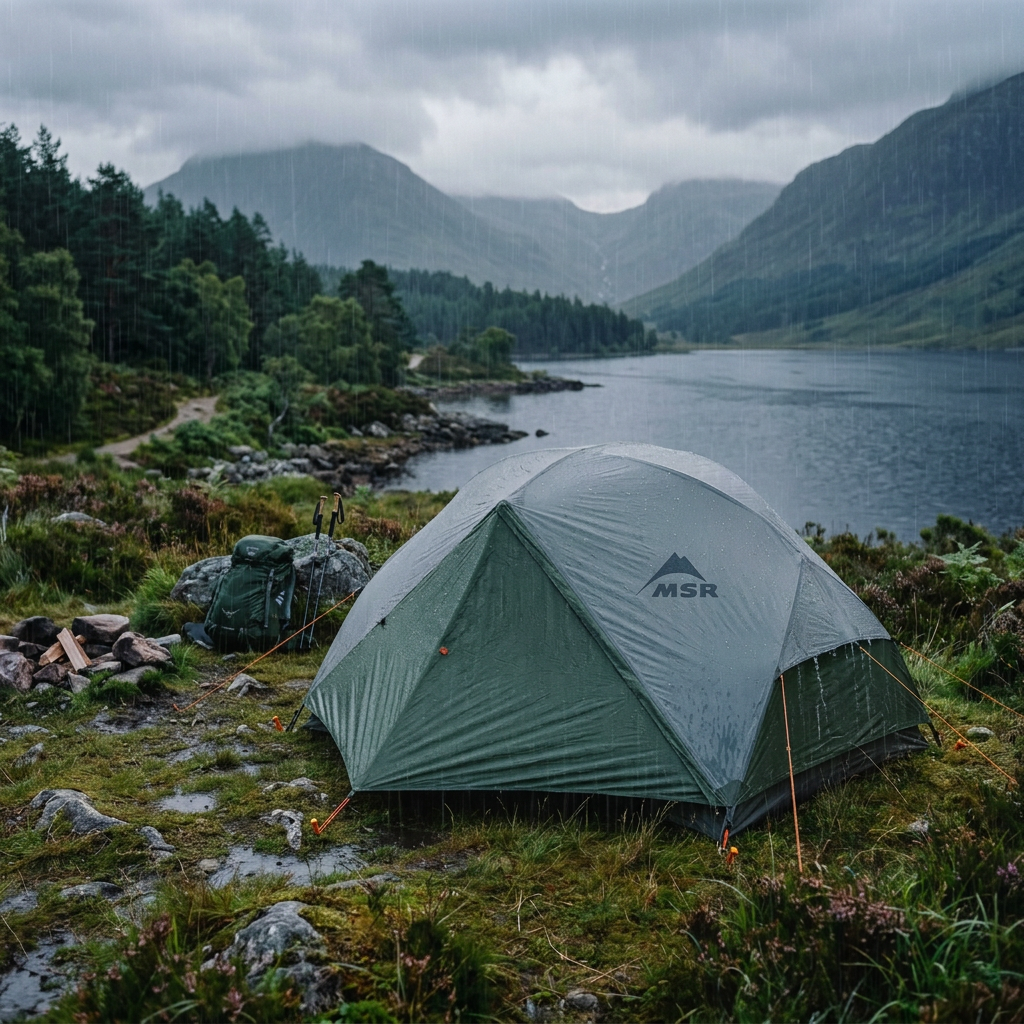
Camping in rainy weather can quickly become uncomfortable when your tent cannot provide reliable protection from moisture. Whether you are planning a weekend camping trip, hiking adventure, fishing expedition, or family holiday, choosing the right shelter is essential. The best waterproof tent for camping should offer suitable weather protection, dependable construction, enough sleeping space, and convenient portability.
However, not every tent advertised as waterproof offers the same level of protection. Some feature full-coverage rainflies, sealed seams, and waterproof floor coatings, while others are designed mainly for light rain and ordinary outdoor conditions.
In this guide, we will compare five camping tent options available through Amazon, considering their construction, weather protection, capacity, portability, setup convenience, and practical limitations.
Our goal is to help you understand what makes a camping tent suitable for different outdoor activities and what to check before purchasing. We will also explain important waterproofing specifications so you can make a more informed buying decision.
2. Quick Comparison Table
The five products below are candidates from the camping-tent models discussed in our previous work. Their exact current Amazon listings and specifications still need verification before publication.
| Product | Intended comparison | Amazon details |
|---|---|---|
| Coleman Sundome | General camping | Listing to verify |
| Coleman Skydome | Convenient setup | Listing to verify |
| Naturehike Cloud-Up 2 | Backpacking | Listing to verify |
| Amazon Basics 2-Person Dome Tent | Budget camping | Listing to verify |
| Wakeman Outdoors 2-Person Tent | Basic outdoor use | Listing to verify |
3. How We Chose These Products
When comparing the best waterproof tent for camping, several factors deserve attention. The first is weather protection, including the rainfly design, waterproof fabric coating, sealed seams, and floor construction. These details help determine how well a tent may protect campers from rain.
We also consider materials and construction. Polyester and nylon fabrics are commonly used in camping tents, while pole materials influence the overall structure and portability.
Capacity is another important consideration. A two-person tent may suit solo campers who need extra room or couples travelling light, while families generally need larger sleeping areas.
Portability matters particularly for hikers and backpackers. Packed weight, carry bags, pole design, and packed dimensions can affect how convenient a tent is to transport.
Finally, we consider setup convenience, ventilation, storage space, and value for money.
This guide is intended as a product-information comparison, not a personal hands-on testing report. Product-specific claims will be included only after checking the corresponding Amazon listings.
1. Coleman Sundome Camping Tent – A Practical Option for General Camping
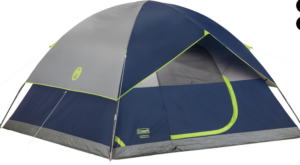
The Coleman Sundome is one of the camping tent models worth considering for general outdoor activities. It is available in different capacity options, making the exact model important when comparing it with other tents. Before purchasing, buyers should check the Amazon listing for its rainfly design, WeatherTec features, dimensions, weight, and included accessories.
Key Features
The following ten details should be checked against the exact Amazon listing before publication:
- Tent capacity: Confirm the number of occupants supported by the selected model.
- Fabric material: Verify the tent body material.
- Rainfly design: Check the type and coverage of the included rainfly.
- Floor construction: Verify the floor material and construction.
- Seam protection: Check whether the seams are taped, sealed, or inverted.
- Pole construction: Confirm the pole material and design.
- Ventilation: Check the number and position of windows and vents.
- Interior storage: Verify whether storage pockets are included.
- Setup system: Confirm the assembly method and manufacturer’s setup claims.
- Carrying bag: Check the included storage and transportation accessories.
Pros
- Multiple capacity options, if confirmed for the selected listing.
- Potential suitability for general camping.
- Recognised Coleman product range.
- Possible convenience for recreational campers.
- Potentially useful rainfly protection, subject to verification.
- Suitable option to compare for car camping.
- Possible interior organisation features, if included.
- A practical model to compare against other budget camping tents.
Cons
- The exact model’s weight and packed dimensions need checking before recommending it for backpacking.
- The extent of rain protection must be confirmed for the selected version.
Carrying Comfort, Storage, Materials and Portability
Check the packed weight, carry-bag dimensions, pole construction, and fabric specifications on the Amazon listing. These details will help determine whether the tent is more suitable for car camping or carrying over longer distances.
Also check the available interior space and storage pockets. A tent’s stated sleeping capacity does not necessarily mean that occupants will have generous room for luggage.
Best For and Buying Recommendation
The Coleman Sundome is a candidate for campers comparing general-purpose recreational tents. Its suitability for rainy conditions should be judged using the exact rainfly, seam, and floor specifications on the Amazon listing.
2. Coleman Skydome Camping Tent – A Setup-Convenience Option
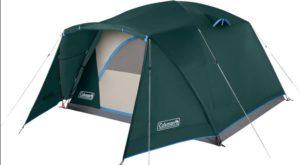
The Coleman Skydome is another model to consider when comparing camping tents for recreational use. It should be evaluated based on its exact size, frame design, rainfly coverage, floor construction, and weather-protection features. Different versions may have different specifications, so buyers should confirm the selected model before purchasing.
Key Features
- Tent capacity: Confirm the available sleeping capacity.
- Tent fabric: Verify the body material.
- Rainfly: Check the rainfly design and coverage.
- Floor: Confirm the floor material and construction.
- Seams: Check the seam protection method.
- Frame: Verify pole materials and construction.
- Setup: Confirm the manufacturer’s setup system.
- Ventilation: Check windows and mesh panels.
- Interior space: Verify floor dimensions and peak height.
- Transport: Confirm packed weight and carry-bag dimensions.
Pros
- A model worth comparing for recreational camping.
- Available in different configurations, if confirmed.
- Potentially convenient setup design, subject to listing verification.
- A useful option for comparing dome tent construction.
- Rainfly protection can be evaluated from the exact listing.
- Interior capacity can be compared with competing models.
- Frame construction provides a useful comparison point.
- Suitable for evaluating car-camping requirements.
Cons
- Packed weight may affect suitability for backpacking.
- The weather protection of the specific version needs verification.
Carrying Comfort, Storage, Materials and Portability
Review the exact packed weight and storage dimensions before deciding whether this model is suitable for hiking or car camping. Check whether the carry bag is included and whether the tent’s pole system can be packed conveniently.
The material specifications should also be examined to understand the tent’s intended use and weather limitations.
Best For and Buying Recommendation
This model is worth comparing for campers who value convenient assembly. Check its rainfly coverage, waterproof specifications, and packed weight before choosing it over the other options.
3. Naturehike Cloud-Up 2 – A Backpacking Tent to Consider
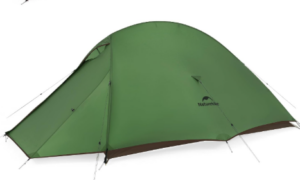
The Naturehike Cloud-Up 2 is a candidate for campers who prioritise portability and a compact shelter. Backpacking tents need to balance sleeping space, packed weight, weather protection, and ease of transportation. Before recommending this model, check the exact Amazon version for its fabric, pole material, waterproof rating, packed dimensions, and included accessories.
Key Features
- Sleeping capacity: Confirm the two-person configuration.
- Fabric: Verify the tent body and rainfly materials.
- Waterproof rating: Check the manufacturer’s stated hydrostatic-head rating.
- Seam construction: Confirm whether seams are taped or sealed.
- Pole material: Verify the frame material.
- Packed weight: Check the total packed weight.
- Packed dimensions: Confirm the storage size.
- Door design: Verify the number and position of entrances.
- Vestibule: Check whether additional covered storage space is included.
- Accessories: Confirm whether a footprint, stakes, and carry bag are supplied.
Pros
- A model worth considering for backpacking.
- Compact transportation can be evaluated using its packed dimensions.
- The two-person design may suit couples or solo campers.
- Its waterproof rating can be compared with other tents.
- Pole materials provide a useful construction comparison.
- Vestibule space may offer additional gear storage if included.
- Its packed weight can help buyers compare hiking suitability.
- Included accessories may influence overall value.
Cons
- A two-person tent may provide limited space for two people and their equipment.
- Its suitability for severe weather cannot be established without checking the exact waterproof and wind-resistance specifications.
Carrying Comfort, Storage, Materials and Portability
Packed weight is particularly important for backpacking. Check the full packed weight rather than relying on the weight of the tent fabric alone. Poles, stakes, footprint, and other accessories can add to the load.
Also inspect the packed dimensions and carry-bag design. The vestibule, if included, may provide a useful place to keep muddy footwear and equipment outside the sleeping area.
Best For and Buying Recommendation
The Naturehike Cloud-Up 2 is a candidate for hikers and backpackers who want a compact two-person shelter. Compare its verified waterproof rating, packed weight, and included accessories before deciding whether it is the right option.
4. Amazon Basics 2-Person Dome Tent – A Budget Camping Candidate
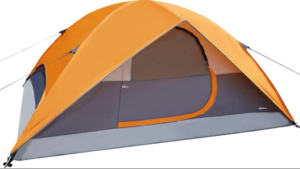
The Amazon Basics 2-Person Dome Tent is a candidate for buyers comparing basic camping shelters. Its suitability depends on the specifications of the exact listing, including fabric construction, rain protection, floor dimensions, ventilation, and packed weight. Buyers should not assume that a product described as waterproof will necessarily withstand prolonged or heavy rainfall.
Key Features
- Capacity: Confirm the stated two-person capacity.
- Fabric: Verify the tent material.
- Rain protection: Check the waterproof claims and supporting specifications.
- Rainfly: Confirm whether a rainfly is included.
- Floor: Check the floor material.
- Pole system: Verify the frame construction.
- Ventilation: Check mesh panels and ventilation openings.
- Entrance: Confirm the door and closure design.
- Interior dimensions: Verify floor area and peak height.
- Transport: Check the packed weight and carry bag.
Pros
- A candidate for budget-conscious campers.
- The two-person configuration can suit simple camping trips.
- Its price can be compared with other entry-level tents.
- Its floor dimensions can help buyers assess sleeping space.
- Its materials can be evaluated against competing models.
- Its ventilation design can be checked for warm-weather use.
- Its packed dimensions can help determine portability.
- Its included accessories can be considered when assessing value.
Cons
- Interior space may be limited for two occupants with bulky equipment.
- Rain protection needs careful verification before use in wet conditions.
Carrying Comfort, Storage, Materials and Portability
Check the product’s packed weight and dimensions to understand how easy it is to transport. A compact carry bag can be convenient, but the actual weight is especially important for hikers.
For storage, examine the floor dimensions and any internal pockets. Also confirm the fabric and rainfly details to understand whether the tent is appropriate for the conditions in which you plan to camp.
Best For and Buying Recommendation
This model is worth comparing for buyers looking at entry-level camping tents. Before purchasing, verify its weather-protection specifications and ensure its sleeping capacity meets your need
5. Wakeman Outdoors 2-Person Tent – A Basic Outdoor Camping Option
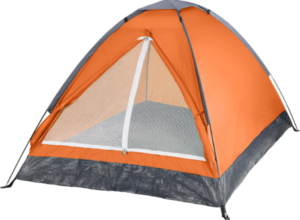
The Wakeman Outdoors 2-Person Tent is another candidate for buyers comparing simple outdoor shelters. Its practical value depends on its actual construction, included rainfly, capacity, weight, and weather-protection specifications. It is important to check the exact Amazon listing because different versions or packages may contain different accessories.
Key Features
- Capacity: Verify the stated sleeping capacity.
- Tent body: Confirm the fabric material.
- Rainfly: Check whether a removable rainfly is included.
- Waterproofing: Verify any stated waterproof rating.
- Floor construction: Check the floor material.
- Frame: Confirm the pole material.
- Ventilation: Check the mesh and ventilation design.
- Entrance: Verify the door configuration.
- Storage: Check the interior space and pockets.
- Portability: Confirm packed weight and carry-bag dimensions.
Pros
- A candidate for basic recreational camping.
- The two-person capacity can suit solo campers or couples.
- Its construction can be compared with other entry-level models.
- The rainfly design can be evaluated for rain protection.
- Its packed weight can help buyers assess portability.
- Its setup system can be compared with other dome tents.
- Its dimensions can help buyers judge usable space.
- Its price and included accessories can be compared with competing options.
Cons
- Sleeping space may be limited when two campers bring large bags.
- Its suitability for heavy rainfall must be confirmed from the listing.
Carrying Comfort, Storage, Materials and Portability
Before purchasing, check the total packed weight and whether the carry bag is included. These details are important when transporting the tent to a campsite.
Look at the interior dimensions and available storage arrangements. The fabric, floor, and rainfly specifications should also be considered when deciding whether the tent is appropriate for the expected weather.
Best For and Buying Recommendation
The Wakeman Outdoors tent is worth comparing for people looking for a basic two-person shelter. It should only be recommended for wet-weather camping after verifying its rainfly and waterproofing details.
How to Choose the Best Waterproof Tent for Camping
Choosing the best waterproof tent for camping involves more than looking at the product title or advertised capacity. You need to understand how the tent is constructed, how it handles rain, and whether it suits your outdoor activities.
1. Check the Waterproof Rating
One of the most important specifications is the hydrostatic-head rating, usually measured in millimetres (mm). It indicates how much water pressure the fabric can withstand in a standard test.
For example, a fabric rated at 3,000mm has a higher hydrostatic-head rating than one rated at 1,000mm. However, the rating alone does not guarantee that the complete tent will remain dry. Seam construction, floor design, rainfly coverage, and setup also matter.
2. Look for a Reliable Rainfly
A rainfly is an additional protective layer designed to help prevent rain from reaching the inner tent. A full-coverage rainfly generally offers more coverage than a partial rainfly.
Check the Amazon product photographs and description to understand how much of the tent the rainfly covers. Also check whether the fly creates a vestibule for storing equipment.
3. Examine the Floor and Seams
Rain can enter through the bottom of a tent or through poorly protected seams. Look for a raised bathtub-style floor, sealed or taped seams, and clearly stated waterproof floor specifications.
Do not assume that a waterproof rainfly means every part of the tent has the same level of protection.
4. Choose the Right Capacity
Tent capacity is usually expressed by the number of people it can accommodate. A two-person tent may be suitable for two people sleeping close together, but it might not leave enough room for large backpacks.
For more comfort, consider a larger capacity if you will be camping with children or carrying plenty of equipment.
5. Consider Weight and Portability
Backpackers should pay close attention to packed weight and dimensions. A heavy tent can become uncomfortable to carry over long hiking distances.
For car camping, weight may be less important because the tent is transported in a vehicle. In that case, sleeping space, headroom, and setup convenience may matter more.
6. Check the Materials and Poles
Common tent fabrics include polyester and nylon. Their performance depends on fabric construction, coating, thickness, and manufacturing quality.
Also examine the pole material. Aluminium and fibreglass poles have different weight, flexibility, and handling characteristics. Check the listing for the exact materials rather than assuming all versions use the same frame.
7. Consider Ventilation
Good ventilation helps reduce condensation inside the tent. Look for mesh panels, windows, and ventilation openings. A tent can be waterproof and still experience condensation when warm, moist air builds up inside.
8. Avoid Common Buying Mistakes
Before placing an order, avoid these mistakes:
- Buying based on the word “waterproof” without checking the specifications.
- Ignoring the packed weight.
- Assuming the advertised capacity means spacious sleeping conditions.
- Overlooking whether the rainfly, footprint, stakes, and carry bag are included.
- Ignoring ventilation and condensation.
- Failing to check the exact model and customer feedback.
Finally, compare the latest Amazon listing details, prices, availability, and customer reviews before making your decision. Product specifications and packages can vary between versions.
Frequently Asked Questions About Waterproof Camping Tents
1. What makes a camping tent waterproof?
A waterproof camping tent uses protective fabric coatings and construction features designed to prevent water from entering. These may include a waterproof rainfly, sealed seams, and a water-resistant or waterproof floor. Buyers should check the actual specifications rather than relying only on the product title.
2. What waterproof rating should I look for in a camping tent?
Check the hydrostatic-head rating, which measures the fabric’s resistance to water pressure in millimetres. A higher rating indicates greater resistance in that test, but the whole tent’s performance also depends on its seams, floor, rainfly coverage, and setup.
3. Is a two-person tent suitable for two adults?
A two-person tent is designed around two occupants, but usable space varies by model. Two adults with large backpacks may find the interior restrictive. Check the floor dimensions, peak height, and vestibule space before choosing a tent.
4. Are lightweight waterproof tents suitable for backpacking?
Yes, some lightweight tents are designed for backpacking. However, buyers should compare packed weight, pole materials, waterproof specifications, and included accessories. A lightweight design should not be assumed to provide protection against every weather condition.
5. How do I maintain a waterproof camping tent?
Allow your tent to dry completely before storing it to help prevent mould and unpleasant odours. Clean it according to the manufacturer’s instructions, avoid harsh cleaning products, and inspect the seams, floor, rainfly, and zippers regularly. Store it in a cool, dry place.
Final Thoughts: Choosing the Best Waterproof Tent for Camping
Finding the best waterproof tent for camping depends on your budget, outdoor activities, group size, and expected weather conditions. The Coleman Sundome and Coleman Skydome are useful models to compare for general recreational camping, while the Naturehike Cloud-Up 2 is a candidate for backpackers who prioritise portability.
The Amazon Basics 2-Person Dome Tent and Wakeman Outdoors 2-Person Tent are also worth examining when comparing entry-level options. However, their suitability for wet-weather camping depends on the exact waterproofing and construction details of the selected versions.
Before purchasing, compare the rainfly coverage, waterproof rating, floor construction, seam protection, packed weight, and sleeping dimensions. These specifications will help you choose a tent that better matches your needs.
Visit the relevant Amazon listings to check the latest specifications, prices, and availability before making a purchase. You can also explore more camping equipment reviews and outdoor product guides at Outdoors Gear Guide to prepare for your next adventure.
Affiliate Disclosure
Disclosure: Outdoors Gear Guide may earn a commission from qualifying purchases made through affiliate links, at no additional cost to you. As an Amazon Associate, we earn from qualifying purchases. Product specifications, prices, availability, and customer ratings may change, so please check the current Amazon listing before purchasing.